Medallion Seamless Pattern: A Practical Resource for Designers and Content Creators
Pattern design plays a foundational role in digital and print work, yet not all patterns offer the flexibility that modern projects demand. Medallion seamless pattern assets have gained attention for their structured, symmetrical motifs and their ability to integrate into a wide range of visual contexts. Whether you are building a brand identity, designing packaging, or creating backgrounds for web content, understanding what a medallion seamless pattern offers and where it may fall short can help you decide if it belongs in your toolkit.
What Defines a Medallion Seamless Pattern
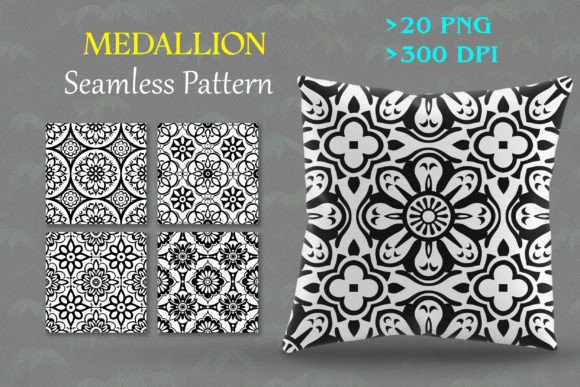
A medallion seamless pattern is built around a central, often symmetrical motif that repeats without visible seams across a surface. The medallion itself can range from intricate floral rosettes to geometric mandalas or stylized emblem shapes. What makes this pattern category distinct is its reliance on balanced, repeating focal points that create a sense of order and rhythm.
Unlike organic or random repeating patterns, the medallion variety relies on deliberate alignment. The repeating unit is carefully constructed so that the edges match perfectly when tiled, producing an uninterrupted flow. This technical precision is what separates a usable seamless pattern from one that appears disjointed or amateurish.
From a design perspective, medallion patterns carry historical weight. They appear in textiles, architecture, and decorative arts across cultures. However, contemporary digital versions strip away unnecessary ornamentation and focus on clean lines, scalable vector geometry, and color versatility. This makes them suitable for both traditional and modern applications.
Key Characteristics That Affect Usability
When evaluating a medallion seamless pattern for a project, several characteristics determine how well it will perform in practice.
Symmetry and Balance
The strongest medallion patterns exhibit clear symmetry. This does not mean every tile is identical in color or detail, but the structural balance must hold. Symmetry creates a predictable visual rhythm, which is useful when the pattern appears behind content such as text or product images. Asymmetrical medallion patterns can work for artistic purposes but tend to be less reliable for functional backgrounds where consistency matters.
Seamless Construction
The term seamless is not a marketing label; it is a technical requirement. A properly constructed medallion seamless pattern tiles flawlessly in both horizontal and vertical directions. This means no visible edges, gaps, or misalignments when the pattern repeats across a large canvas. Quality assets will specify whether they have been tested for seamless repetition. Patterns that fail this test can create distracting lines that undermine the professionalism of the final output.
Scale and Density
The size of the medallion relative to the overall design space matters significantly. Large medallion motifs create bold, statement-making surfaces but may overwhelm smaller layouts. Smaller, denser medallions produce a texture-like effect that works well for subtle backgrounds. The best assets offer multiple scale options or are vector-based so you can resize them without losing quality.
Color Palette Flexibility
Medallion patterns often come in preset color schemes. Some are monochromatic for minimal applications, while others incorporate multiple hues. The practical value of a pattern increases when the color palette is editable or when the asset includes separate layers for the motif and background. This allows you to adapt the pattern to a specific brand palette without starting from scratch.
Real-World Performance Across Use Cases
The practical value of a medallion seamless pattern becomes clear when it is placed in actual projects. Observing how it behaves in different contexts reveals both its strengths and its limitations.
Web and Digital Backgrounds
For website backgrounds, landing pages, and social media graphics, a medallion seamless pattern can add a layer of sophistication. Because the pattern repeats evenly, it creates a consistent backdrop that does not distract from foreground content. However, patterns with high contrast or very detailed motifs can compete with text legibility. A pattern with lower contrast or a softer color scheme tends to perform better behind body copy. For hero sections or headers where contrast is less of a concern, bolder medallion designs can be effective.
Print Materials and Packaging
In print, the seamless nature of these patterns becomes even more critical. A poorly constructed pattern will show seams in printed materials, which is difficult to correct retroactively. High-quality medallion seamless patterns hold up well on packaging, stationery, and brochures because the symmetry creates a polished, intentional look. For packaging, patterns with a central focal point can be aligned with product labels or logos to create a cohesive design system.
Textile and Surface Design
Although less common for digital-first creators, medallion patterns remain a staple in textile design. For anyone producing mockups for fabric, wallpaper, or product surfaces, a seamless medallion pattern provides a repeatable design that mimics real-world manufacturing constraints. The key here is ensuring the motif scales appropriately for the intended product, such as a smaller repeat for apparel and a larger repeat for home decor.
Brand Identity Elements
Some brands use medallion patterns as part of their visual identity, particularly in industries like hospitality, luxury goods, or heritage-focused products. The symmetrical, emblem-like quality of a medallion pattern can reinforce a sense of tradition or quality. For entrepreneurs and small business owners building a brand from scratch, a well-chosen medallion seamless pattern can serve as a custom texture without the cost of commissioning an original design.
Who Benefits Most from Medallion Seamless Patterns
Different creative roles will find varying levels of value in these assets. Based on how medallion seamless patterns are used, certain groups gain more from their strengths.
Graphic and Digital Designers
Designers working on multiple projects across different media benefit from the consistency and reliability of a well-made seamless pattern. Having a library of medallion patterns that are tested for tiling reduces production time. Designers can drop a pattern into a layout and trust that it will repeat correctly without manual adjustment. The main limitation is that medallion patterns are not universally appropriate for every brand voice, so designers must evaluate whether the formal, structured look aligns with the client's identity.
Marketers and Content Creators
For marketers producing social media content, email headers, or presentation decks, medallion seamless patterns offer a quick way to elevate visual quality. A subtle medallion background can differentiate a standard post from a more polished one. However, marketers should be cautious about overusing patterns that compete with the central message. Patterns with low opacity or muted tones are safer for content-heavy formats.
Small Business Owners and Entrepreneurs
Business owners who handle their own design work often need assets that are both affordable and versatile. Medallion seamless patterns, especially those available in vector formats, provide a professional look without requiring advanced design skills. The ability to recolor and resize the pattern independently makes it easier to maintain brand consistency across product labels, website banners, and print materials. The downside is that many free or low-cost medallion patterns lack the precision of professionally created ones, so quality checking is essential.
Educators and Publishers
For educational materials, worksheets, or digital publications, medallion patterns can serve as decorative borders or thematic backgrounds. The structured nature of the pattern works well for formal or historical topics. Publishers creating non-fiction or cultural content may find medallion patterns useful for chapter headers or section dividers. The key is to use the pattern sparingly to avoid visual overload.
Evaluating Quality and Long-Term Value
Not all medallion seamless patterns deliver the same level of quality. Over time, you develop a sense for which assets will hold up under repeated use and which will cause frustration.
High-quality patterns are typically provided in vector formats such as SVG or AI, or at sufficiently high raster resolutions for print work. They include documentation on how the pattern tiles and whether it is intended for web or print use. Patterns that are described as seamless but have not been tested across multiple repeats often reveal flaws when scaled or printed. Checking the asset by duplicating it several times in a test file is a worthwhile step before committing to a pattern for production.
Another indicator of quality is the color range. Patterns that are limited to two or three colors tend to be more versatile because they can be matched to a broader set of brand palettes. Patterns with complex gradients or numerous colors may look impressive in isolation but can clash with other design elements.
Long-term value comes from assets that you can adapt across projects. A medallion seamless pattern that includes separate layers for the motif, background, and details allows you to create variations without purchasing additional files. This makes the pattern a reusable design resource rather than a one-off decoration.
Practical Recommendations for Getting the Most Out of Medallion Seamless Patterns
If you are considering adding medallion seamless patterns to your workflow, a few practical steps can help you use them effectively.
- Test the tile repeat before using any pattern in a final layout. Create a 3x3 grid of the pattern in your design software and inspect the seams at full zoom. Even small misalignments become obvious in large applications.
- Adjust opacity and scale to match the context. For backgrounds behind text, reducing opacity to 10–20 percent often preserves the pattern's presence without sacrificing readability.
- Use solid color blocks to anchor the pattern. A medallion pattern that covers the entire surface can feel busy, but pairing it with solid color sections creates visual breathing room.
- Recolor deliberately. If the asset allows it, modify the pattern colors to match your brand. This ensures the pattern feels cohesive rather than generic.
- Limit the number of patterns in a single project. Using one medallion pattern consistently across a website or print piece creates a stronger identity than mixing multiple patterns that compete for attention.
One realistic limitation worth noting: medallion seamless patterns are not ideal for every design style. Contemporary minimal or flat designs may find the structured ornamentation of a medallion pattern out of place. In cases where the brand voice is informal, playful, or highly experimental, a medallion pattern can feel too formal or traditional. Knowing when not to use a pattern is as important as knowing how to use it.
How to Decide If a Medallion Seamless Pattern Fits Your Project
The decision to use a medallion seamless pattern should be based on the specific needs of your project rather than a general preference for patterns. Start by assessing the visual tone you want to communicate. If your project calls for order, symmetry, or a sense of tradition, a medallion pattern can reinforce that message effectively. If your goal is to appear modern, raw, or unstructured, other pattern types or plain surfaces may serve you better.
Consider also your production environment. If you work primarily in web design with responsive layouts, test how the pattern behaves at different screen sizes. A pattern that looks elegant on a desktop monitor may become too dominant or repetitive on a mobile screen. Conversely, a pattern that works well on mobile may appear too sparse on larger displays. Vector-based patterns give you the flexibility to adjust scale on the fly, which is a significant advantage in responsive design.
For print projects, the resolution and color mode of the pattern are critical. Patterns designed for screen use may not have enough detail for high-resolution printing. Always verify that the pattern file is suitable for the output format you need. CMYK-compatible patterns with at least 300 dpi are standard for professional print work.
Finally, think about the longevity of your project. If you are designing something that will be used for years, such as a brand identity or a product line, invest in a medallion seamless pattern that you can modify and update. A pattern that is locked into a single color scheme or format may become outdated or difficult to adapt as your brand evolves.
Medallion seamless patterns are a specific tool within a larger design ecosystem. They offer structure, elegance, and repeatability that many other pattern styles lack. But like any tool, their value depends on the skill with which they are applied. When chosen thoughtfully and executed with attention to detail, they can enhance a wide range of projects without overwhelming them. When used without consideration for context, they can feel decorative without purpose. Understanding that balance is what allows you to use medallion seamless patterns not just as decoration, but as a functional part of your creative work.