Torn Paper Collage Texture
What Is Torn Paper Collage Texture?
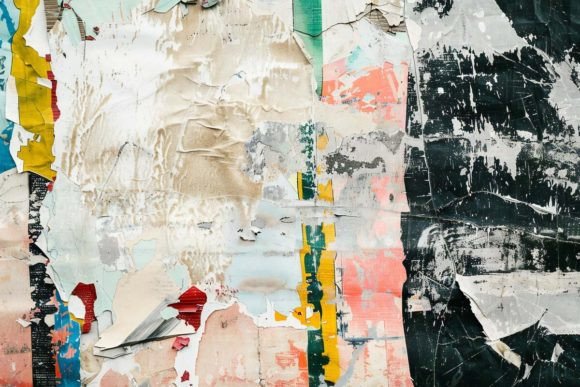
Torn paper collage texture refers to the tactile and visual surface quality created when pieces of paper are ripped—rather than cut—and layered onto a substrate to form an image or abstract composition. Unlike the crisp, mechanical edge of scissor-cut paper, a torn edge reveals the paper's fibrous core, producing a soft, irregular, and organic boundary. This seemingly simple technique transforms paper from a flat medium into one that carries depth, movement, and a distinct handmade character.
Artists, educators, and designers have long embraced torn paper collage not only as a craft for children but as a sophisticated artistic practice. The texture itself—rough, feathered, sometimes fuzzy—adds a sense of imperfection and authenticity that polished digital graphics often lack. In a world saturated with sleek, mass-produced imagery, the raw quality of torn paper collage texture offers a refreshing return to tactility and process.
The Purpose and Significance of Torn Paper Texture in Art
Why tear paper when you could cut it with precision? The answer lies in what tearing does to the paper's fibers. When a blade severs paper, it creates a clean, uniform line. Tearing, however, pulls and stretches the fibers until they break naturally. This produces a roughened edge that catches light differently, creating subtle shadows and highlights that give the collage a three-dimensional feel.
The significance of this texture extends beyond aesthetics. Torn edges suggest spontaneity and movement. They evoke a sense of discovery, as if the artist did not force the paper into place but allowed it to find its own boundary. This aligns with many contemporary art movements that value process over perfection, such as Abstract Expressionism and Arte Povera, where the materials themselves carry meaning.
Moreover, torn paper collage texture has a powerful psychological effect on the viewer. The uneven edges feel human and accessible. They lower the barrier between the artwork and the audience, inviting closer inspection. People naturally want to touch a torn edge—it looks as though it was made by hand, not by machine, and that handmade quality builds an immediate emotional connection.
How Torn Paper Differs from Cut Paper in Practice
To truly understand the texture, it helps to compare the two methods directly. Consider the following contrasts:
- Edge quality: Cut paper has a sharp, consistent edge; torn paper has a soft, fibrous, irregular edge.
- Light behavior: A cut edge lies flat and reflects light uniformly; a torn edge creates micro-shadows that add depth.
- Perception: Cut paper feels precise and controlled; torn paper feels expressive and organic.
- Layering: Cut paper tends to sit flush against the background; torn paper can curl slightly, adding literal texture.
- Speed: Cutting requires measuring and planning; tearing is faster and more intuitive, encouraging experimentation.
These differences make torn paper collage texture uniquely suited for projects that require warmth, motion, or a sense of the handmade. It is not a shortcut—it is a deliberate choice with a distinct visual language.
Practical Relevance: Where Torn Paper Collage Texture Appears Today
Far from being a relic of kindergarten art class, torn paper collage texture thrives in many areas of modern life and work. Here are several domains where it plays a significant role:
Fine Art and Illustration
Many contemporary illustrators use torn paper as their primary medium. By layering torn pieces of painted or found paper, they build compositions that feel both dimensional and spontaneous. The texture becomes a storytelling device—ragged edges can suggest age, decay, or raw emotion, while smooth torn curves can feel gentle and lyrical. Galleries and museums now regularly exhibit works that rely entirely on torn paper collage texture for their impact.
Graphic Design and Branding
Brands seeking an authentic, artisanal identity often incorporate torn paper textures into their logos, packaging, and marketing materials. A torn paper edge communicates honesty, craftsmanship, and a break from corporate uniformity. When used digitally as a texture overlay, it adds grit and warmth to otherwise flat designs. Many designers scan actual torn paper and use it as a texture asset in Adobe Photoshop, Procreate, or Canva to give digital work a tactile edge.
Education and Child Development
In classrooms, torn paper collage is more than an art project—it is a developmental tool. Tearing paper strengthens fine motor skills, hand-eye coordination, and spatial reasoning. When children tear paper, they learn about cause and effect: pulling in one direction yields a different edge than pulling in another. Teachers use torn paper collage texture to teach texture vocabulary, color theory, and composition without the intimidation of precision cutting. It is a forgiving medium that encourages risk-taking and creative problem-solving.
Therapy and Wellness
Art therapists frequently use torn paper collage with clients who find drawing or painting intimidating. The act of tearing is physically releasing—it provides a safe outlet for tension and frustration. The resulting texture is almost always pleasing, which builds confidence. Because there is no "wrong" way to tear paper, the process lowers anxiety and promotes mindfulness. Clients focus on the sensation of tearing, the sound, and the visual result, grounding them in the present moment.
Digital Art and Mixed Media
Even in the digital realm, torn paper collage texture remains influential. Digital brushes that simulate torn edges are among the most popular tools in illustration apps. Artists photograph or scan real torn paper and import it as a texture layer, combining analog warmth with digital flexibility. This hybrid approach respects the tradition of torn paper while leveraging the convenience of modern technology. The result is artwork that looks tactile but can be edited, scaled, and reproduced without losing its organic character.
Common Misunderstandings About Torn Paper Collage
Despite its simplicity, torn paper collage texture is often misunderstood. Let me clarify a few assumptions:
- "It is just for children." This is the most persistent myth. While children certainly enjoy it, torn paper collage is a respected medium in professional art, design, and illustration. Many award-winning picture books are illustrated entirely with torn paper. The texture carries sophistication when used intentionally.
- "You cannot be precise with torn paper." Actually, experienced artists can tear paper with remarkable accuracy. By controlling the speed, angle, and moisture of the paper, they create edges that range from jagged and aggressive to soft and almost invisible. Precision comes from practice, not from scissors.
- "Torn paper looks messy." Messy is a matter of intention. A well-composed torn paper collage can be clean, balanced, and harmonious. The texture adds richness, not chaos. The difference between messy and expressive lies in composition and color choice.
- "Digital textures are just as good." Digital simulations can approximate torn paper, but they cannot fully replicate the physical depth, fiber exposure, and light interaction of real torn paper. Many artists argue that the digital version is a reference, not a replacement. For true texture, nothing beats the real thing.
How to Explore Torn Paper Collage Texture Yourself
If you want to understand this texture deeply, the best way is to try it. You do not need special materials—old magazines, scrap paper, wrapping paper, and even cardboard work beautifully. Here is a simple process to get started:
Step 1: Choose Your Paper
Different papers produce different textures. Newsprint tears easily and produces a soft, fuzzy edge. Cardstock tears with more resistance and yields a cleaner, slightly rougher edge. Handmade paper is full of visible fibers that create dramatic texture. Experiment with several types to see how each behaves.
Step 2: Tear with Intention
Hold the paper close to the intended tear line with both thumbs. Pull gently in opposite directions. For a straight tear, move slowly and keep the tear line parallel to your thumbs. For a curved tear, rotate the paper as you pull. Observe how the fibers stretch before breaking—that stretching is what creates the texture.
Step 3: Layer and Observe
Place your torn pieces onto a background. Overlap them slightly. Notice how the torn edges catch the light differently depending on the angle. The more layers you add, the more depth and complexity the texture achieves. This layering is where torn paper collage texture truly comes alive.
Step 4: Combine with Other Media
Once you are comfortable, try combining torn paper with pencil, ink, paint, or found objects. The contrast between the organic torn edge and a precise drawn line is visually striking. You can also seal your collage with matte medium to preserve the texture while making it more durable.
Building a Broader Understanding
Torn paper collage texture is more than a technique—it is a philosophy about material and process. It teaches us that imperfection can be beautiful, that control and surrender can coexist, and that the hand of the maker is always visible when we choose not to hide it. In an age of digital perfection, torn paper reminds us of the value of touch, time, and texture.
Whether you are an artist looking for a new expressive language, a teacher seeking an inclusive classroom activity, a designer craving authenticity, or simply someone who wants to slow down and create with your hands, torn paper collage texture offers a rich, accessible, and endlessly varied path. It requires no special training, only a willingness to tear, layer, and see what emerges.
The next time you hold a piece of paper, consider not what it says or what it contains, but what its edges could become. A torn edge is a conversation between your hand and the material. That conversation, with all its roughness and tenderness, is the heart of torn paper collage texture.
Final Thoughts
Torn paper collage texture bridges the gap between deliberate art and happy accident. It respects the natural properties of paper while inviting human intuition and emotion into the creative process. From fine art galleries to kindergarten classrooms, from digital design studios to therapeutic settings, this texture continues to prove its relevance and power. Understanding it deepens not only your appreciation of collage but your awareness of how materials speak—if only we are willing to tear them open and listen.