Using the Programming Tshirt Illustrations Bundle in Real-World Workflows
When you build digital products, design assets, or educational content, the visual language you choose matters. The Programming Tshirt Illustrations Bundle offers a collection of pre-made, coding-themed vector graphics that can save hours of custom illustration work. But the real value lies not in the bundle itself—it is in how you integrate it into your existing processes, from planning to final delivery. This article walks through practical ways to incorporate these illustrations into real projects, whether you are a content creator, educator, marketer, or small business owner.
What the Bundle Actually Contains
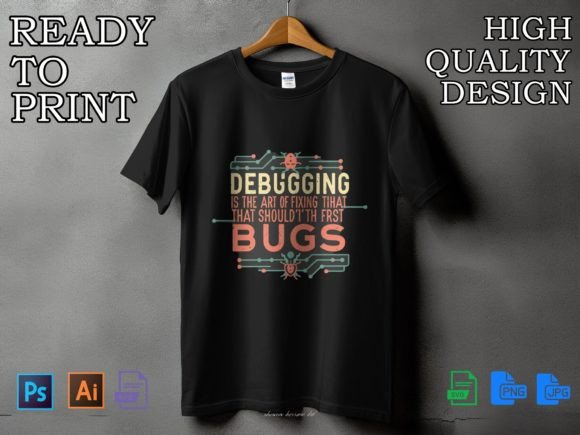
The Programming Tshirt Illustrations Bundle is a set of vector illustrations designed around programming, developer culture, and tech-themed apparel. These are not generic icons—they are full illustrations that can be used on merchandise, in blog posts, in social media graphics, in presentations, and across learning materials. The bundle typically includes multiple file formats such as SVG, EPS, and PNG, making it compatible with design tools like Adobe Illustrator, Figma, Canva, and even web-based editors.
Because the illustrations are vector-based, they scale cleanly from a small web graphic to a large print-ready t-shirt design. This flexibility is key when you plan to use the same asset across different media. The theme centers on programming languages, developer jokes, terminal windows, code snippets, and tech mascots, all rendered in a style that appeals to both professional developers and hobbyists.
Where the Bundle Fits in a Broader Process
Every project has a lifecycle. The Programming Tshirt Illustrations Bundle can be inserted at multiple points:
- Before a project: Use the illustrations as visual references or mood board elements when pitching a concept to a client or team. Instead of describing a "developer t-shirt with a Python joke," you can show a mockup using the actual illustration. This reduces miscommunication and speeds up approval.
- During a project: Replace placeholder images with bundle illustrations as soon as the layout is ready. This gives you a realistic sense of the final look without waiting for a custom illustrator. You can also mix and match elements from different illustrations to create new compositions.
- After a project: Use leftover illustrations for social media posts, email headers, or bonus content for customers. If you run a print-on-demand store, you can rotate designs by swapping illustrations without rebuilding the entire product page.
This before-during-after framework applies to many scenarios: launching an online course, creating a tech blog, designing merchandise for a conference, or building a portfolio site.
Practical Workflow Integration
To get the most out of the bundle, you need to think about how it interacts with your existing tools and methods. Here are several real-world workflows.
For Print-on-Demand and Merchandise Sellers
If you run a store on platforms like Printful, Redbubble, or Teespring, the bundle lets you move from idea to listing faster. Instead of hiring a designer for each new shirt design, you select an illustration, place it on a mockup, and adjust colors to fit your brand. The vector format means you can resize the artwork for different product types—t-shirts, hoodies, stickers, mugs—without losing quality.
One practical tip: create a master template in your design software with standard print dimensions and resolution settings. Then simply import the SVG file from the bundle, position it, and export. This cuts the design time per product from hours to minutes. You can also batch produce multiple variants by changing the background color or adding text overlays.
For Content Creators and Bloggers
Technical blog posts often need visual breaks. A programming illustration can serve as a featured image, a section divider, or a supporting graphic for a code example. The Programming Tshirt Illustrations Bundle gives you a consistent visual theme across your articles, which builds reader recognition. If you write about Python, JavaScript, or DevOps, you can match illustrations to the topic.
To integrate smoothly, keep a folder of pre-optimized PNG files at standard blog widths. When you draft a new post, drop in a relevant illustration before publishing. This avoids the last-minute scramble for images. If you use a CMS like WordPress, you can upload the SVGs directly and resize them inline with CSS.
For Educators and Course Creators
Slides and handouts look more engaging when they include themed visuals. In a programming course, a t-shirt illustration with a humorous coding reference can lighten the mood during a heavy topic. You can also use them in quizzes, certificates, or promotional emails. The bundle provides a library of graphics that you can reuse across semesters or cohorts.
A useful method: create a slide template with a placeholder image frame. Import the illustration, and then pair it with a brief text explanation. This keeps your presentation visually consistent while saving design time.
Compatibility and Preparation
Before you dive into using the bundle, spend a few minutes on preparation. Check the file formats you received. SVGs are best for web and vector editing, while PNGs with transparent backgrounds work well for quick mockups. If you plan to use the illustrations in a collaborative tool like Canva or Figma, import the SVG files into your asset library so your team can access them without searching through folders.
For print work, verify that the resolution is adequate at your target size. Vector files are resolution-independent, but if you are using a raster export, ensure it is at least 300 DPI for fabric prints. Some bundle providers include multiple resolution options—choose the highest one for print and the lowest for web to keep load times fast.
Color consistency is another factor. The illustrations might come in default color palettes. You can recolor them quickly by editing the SVG code or using the "recolor" tool in illustrator. If you have brand colors, apply them across the bundle to create a cohesive look for your store or site.
Organization for Long-Term Use
A bundle with dozens of illustrations can become unwieldy if you do not organize it from the start. Set up a folder structure that makes sense for your workflow. For example:
- By topic: Python, JavaScript, Terminal, Git, General
- By format: SVG, PNG small, PNG large
- By project: Store designs, Blog images, Presentation slides
Add descriptive filenames. Instead of "illustration01.svg," rename it to "python-snake-mascot-blue.svg." This helps you search later. If you use a digital asset management tool or a cloud drive, tag the files with keywords like "programming," "t-shirt," "vector." The time you invest in organization pays back every time you need to find an illustration quickly.
Quality Control and Consistency
Using a pre-made bundle does not mean you skip quality checks. Before you publish any design, review the illustration at full size. Check for alignment, color harmony, and any scaling artifacts. If you combine multiple illustrations, make sure the style matches—the bundle likely has a uniform style, but you might mix illustrations with other sources. In that case, apply consistent strokes, shadows, or color overlays to unify them.
For consistency across a product line, define a few layout rules. For example, all t-shirt designs should have the illustration centered at 70% of the print area width. All blog featured images should have a solid background color from your brand palette. These small standards make your work look deliberate and professional.
Interactions with Other Tools and People
The Programming Tshirt Illustrations Bundle does not exist in isolation. It interacts with:
- Design software: Illustrator, Photoshop, Figma, Canva, Affinity Designer
- Print providers: Use mockup generators or upload files directly
- Content platforms: WordPress, Medium, Notion, Ghost, Shopify
- Team members: Share assets via cloud drives or version control for design files
If you work with a team, set up a shared library of the bundle assets. This way, your designer, marketer, and social media manager all use the same graphics. It prevents brand drift and redundant work. If you are a solopreneur, the bundle reduces your dependency on freelance illustrators for routine projects, freeing up budget for custom work when you really need it.
Scenarios Where the Bundle Saves Time
Consider these common situations where the Programming Tshirt Illustrations Bundle directly helps:
- You are launching a coding bootcamp and need social media visuals for 30 days. Instead of creating 30 unique graphics, you rotate 10 illustrations with different text overlays.
- You run a developer swag store and want to release a seasonal collection. You pick three illustrations, change the background to holiday colors, and list new products in one afternoon.
- You are writing an eBook on Python best practices. Each chapter gets an illustration as a chapter header. The visual theme ties the book together and makes it look polished.
- You need a quick presentation for a local meetup. You drop a programming t-shirt illustration on the title slide and use smaller versions as bullet point icons. The presentation looks custom without hours of work.
In each case, the bundle acts as a productivity multiplier. It reduces the friction between having an idea and delivering a finished asset.
Adapting Illustrations to Your Brand
One common concern with pre-made graphics is that they look generic. The Programming Tshirt Illustrations Bundle avoids this by using thematic detail and styling. However, you can further adapt the illustrations to your brand. Change the fill colors to your brand palette. Add a subtle texture or overlay. Combine two illustrations into a new scene. Add your logo or a tagline in a consistent font. These small adjustments make the bundle feel like your own.
If you are comfortable editing SVG code, you can open the file in a text editor and change hex color codes directly. This is faster than using a design tool for batch changes.
Long-Term Value and Reusability
The real return on investment for a bundle like this comes from reusability. Unlike a commissioned illustration that you use for one project, a bundle can serve you for years. You can use the same illustration on a t-shirt today, in a blog post next month, and on a conference banner next year. The file format compatibility ensures it works with whatever tools you adopt later.
To maximize long-term value, store the original files in a safe, backed-up location. If the bundle provider offers updates or new additions, download them promptly. Track which illustrations you have used and where, so you do not duplicate designs across your own products.
Practical Implementation Tips
Here is a concise list of actionable steps for integrating the bundle:
- Unzip and organize files immediately using a clear folder structure.
- Import SVG files into your design software as editable vectors.
- Create project-specific templates that already have the bundle illustrations placed as placeholders.
- Recolor a subset of illustrations to match your brand, and save them as a brand-specific subfolder.
- Test one illustration across all intended use cases (print, web, presentation) before scaling up.
- Share the organized folder with collaborators or store it in a shared workspace.
- Review and refresh your usage every quarter to keep your content visually current.
These steps require an upfront time investment but pay off each time you reuse an asset.
Final Observations
The Programming Tshirt Illustrations Bundle is not a magic solution, but it is a practical tool for anyone who regularly produces content or products related to programming culture. It fits naturally into a workflow that values efficiency without sacrificing visual quality. The key is to treat the bundle as a resource to be organized, adapted, and reused, rather than a one-off download. When you integrate it thoughtfully, it becomes a reliable part of your creative toolkit, freeing you to focus on the parts of your work that need human judgment and originality. Whether you are shipping a new product, writing a tutorial, or building a brand, these illustrations can help you communicate with clarity and consistency.